Best Angle Grinder Blade for Cutting Porcelain Tile 2026 Buying Guide
Cutting porcelain tile with an angle grinder can feel tricky. You want clean cuts without damaging the tile.
Choosing the right angle grinder blade for porcelain tile is not straightforward. There are many options with different designs, thicknesses, and materials. Some blades offer precision but wear out faster. Others last longer but may cause more chipping. Additionally, blades vary in their compatibility with wet or dry cutting methods. Balancing durability, cut quality, and ease of use can be confusing.
This article will guide you through the main factors to consider. It will help you understand which blade features matter most, depending on your needs and projects.
What Actually Matters When Choosing An Angle Grinder Blade For Porcelain Tile
Precision and minimal chipping are key for porcelain tiles, which are often brittle. A thinner blade usually means cleaner cuts but may wear faster. The blade’s ability to handle wet or dry cutting impacts its lifespan and safety. Vibration reduction also improves control and cut accuracy. Knowing what suits your specific tile and cutting style makes a big difference.
The products below are grouped based on design features and cutting performance. Different blades suit different tasks, from light DIY jobs to more demanding tile work. This overview will help you match the blade to your cutting needs without focusing on rankings.
Zorunna 4.5″ Diamond Tile Cutting Blade
The Best Angle Grinder Blade for Cutting Porcelain Tile, perfect for DIY enthusiasts and professionals needing precise, chip-free tile cuts.

The ZORUNNA 4.5″ Diamond Blade for Angle Grinder is designed specifically to tackle the challenges of cutting porcelain, ceramic, and granite tiles with precision. Its ultra-thin X-teeth turbo mesh rim reduces chipping and delivers smooth, fast cuts, making it ideal for anyone who needs clean edges and reliable performance when working with fragile tile materials.
Using this blade feels efficient and confident, whether you’re doing wet or dry cuts. The thicker core reduces vibration and wobbling, which adds to the smoothness and safety of each cut. I appreciated how it handled tough tile without frequent blade changes, saving time and effort on the job.
- Ultra-thin design ensures precision and minimal chipping
- Suitable for both wet and dry cutting conditions
- Thicker core reduces vibration for safer operation
- Compatible with angle grinders, tile saws, and wet saws
Who Should Consider This Blade
This blade is a great fit for DIYers and professionals who require precise and smooth cuts on porcelain and ceramic tiles without damaging the material. If you regularly work with a variety of tile types and want a blade that performs well under both wet and dry conditions, this is a solid choice.
If you rarely cut tiles or only work on very large, rough cuts where precision is less important, you might not need such a specialized blade. However, for delicate tile work, this blade removes the guesswork and frustration of chipping or uneven edges.
One practical tip: always ensure your angle grinder is compatible with a 7/8″ arbor blade and consider wet cutting when possible to extend blade life. You can feel assured that this blade balances durability with high-quality cuts, reducing your need for replacements and rework.
Zorunna 5pcs 4.5″ Diamond Tile Blades
The Best Angle Grinder Blade for Cutting Porcelain Tile, perfect for DIYers and professionals needing precise and efficient tile cutting.

This set of five 4-1/2″ diamond saw blades from ZORUNNA is designed specifically for angle grinders to cut porcelain tile, ceramic, granite, and marble with precision. Its ultra-thin design featuring an X-teeth turbo mesh rim minimizes chipping, ensuring smooth and accurate cuts, which solves the common problem of tile cracking or uneven edges.
Using these blades feels efficient and reliable thanks to their ability to handle both wet and dry cutting without losing performance. The thicker core reduces vibration and wobbling, making the cutting process safer and more comfortable, so you can work confidently and save time on your tiling projects.
Key Strengths
- Ultra-thin blade for precise, chip-free cuts on porcelain and ceramic tiles
- Suitable for wet and dry cutting, enhancing versatility
- Thicker core design reduces vibration and improves safety
- Long-lasting diamond matrix extends blade life and reduces replacements
- Compatible with angle grinders, tile saws, and wet saws with 7/8″ arbor
Who Should Consider This Blade
If you regularly work with porcelain or ceramic tiles and need a dependable blade for your angle grinder, this ZORUNNA set is a solid choice. It’s ideal for both DIY enthusiasts and professionals who value clean, precise cuts with minimal hassle. However, if your cutting needs are limited to softer materials or you rarely use an angle grinder, you might not require such a specialized blade.
This blade set removes the stress of uneven cuts and frequent blade changes by offering durability and efficiency in one. When using, ensure your angle grinder fits the 7/8″ arbor to guarantee compatibility and optimal performance. You can feel assured that these blades provide a smooth, vibration-reduced cutting experience, making tile projects less daunting and more enjoyable.
Ezarc 4.5 Inch Super Thin Diamond Blade
The Best Angle Grinder Blade for Cutting Porcelain Tile, ideal for tile installers and DIY enthusiasts seeking precise and clean cuts.
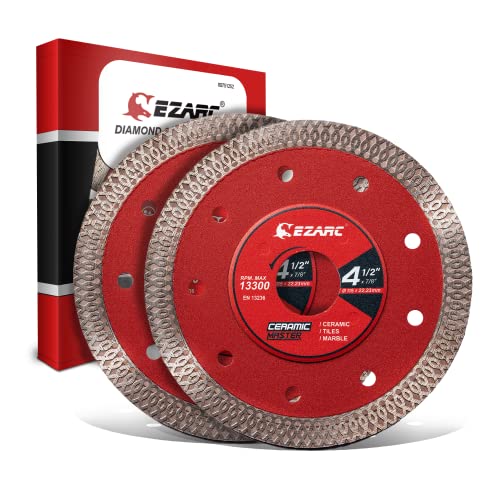
The EZARC 4.5 Inch Super Thin Diamond Blade is a diamond saw blade designed specifically for angle grinders to deliver smooth and precise cuts on porcelain, ceramic, granite, and marble tiles. Its super thin design reduces cutting force, preventing tile breakage and minimizing wear on your tools, making it an excellent choice for detailed tile work.
Using this blade feels effortless and reliable whether you are a professional tile installer or a DIY hobbyist. It ensures clean cuts with minimal chipping thanks to its X-teeth turbo mesh rim and diamond-embedded edge, which boosts confidence and saves time on finishing work.
- Super Thin Design: Requires less cutting force, reducing tile breakage.
- Clean & Precise Cuts: Minimal chipping for professional results.
- Compatible: Fits most angle grinders and tile saws with 7/8″ arbor, includes 5/8″ adapter.
- Durable & Safe: Made with high-strength alloy steel and premium diamond matrix for spark-free cutting.
Who Should Consider This Blade
This blade is perfect for tile installers and DIYers working with porcelain and similar hard tile materials who need a reliable blade for precision cuts without chipping. If you want to save time and reduce frustration caused by broken tiles, this blade will meet your needs.
However, if you primarily cut softer materials or require a blade for heavy-duty construction use beyond tile, you might want to explore other options tailored for those tasks. For best results, use wet cutting to extend blade life and maintain cutting performance.
One practical tip: always ensure your angle grinder is compatible with the 7/8″ arbor or use the included adapter. This blade removes the stress of uneven cuts and tile damage, giving you cleaner results and more confidence in your projects.
How To Choose The Right Blade For Cutting Porcelain Tile
Consider the balance between cutting precision and blade durability. Thinner blades offer smoother cuts but may wear faster under heavy use. Think about whether you need a blade for wet or dry cutting and match it to your tool’s compatibility. Reflect on your typical projects to decide if you require multi-pack blades or a single high-quality disc. Prioritize blades that reduce vibration and chipping for cleaner results.
Common Mistakes And Who Should Avoid These Blades
- Expecting all blades to work equally well on very hard or thick materials can lead to frustration.
- Choosing ultra-thin blades for heavy demolition or rough cutting tasks may cause premature wear or damage.
- Using blades incompatible with your grinder’s arbor size can result in unsafe operation.
- Buyers needing blades for non-tile materials like wood or metal should look elsewhere.
- Those unfamiliar with handling diamond blades might find the cutting technique requires patience and care.
Best Angle Grinder Blade For Cutting Porcelain Tile: Frequently Asked Questions
Can I use these diamond blades for both wet and dry cutting?
Most blades reviewed are designed for both wet and dry cutting. However, wet cutting generally extends blade life and reduces dust. Always check your blade’s specifications and manufacturer recommendations.
How important is blade thickness for cutting porcelain tile?
Blade thickness affects cutting precision and speed. Thinner blades provide smoother, cleaner cuts but may wear faster. Thicker blades last longer but can cause more chipping on delicate tiles.
What arbor size do I need for these blades?
The blades commonly fit a 7/8-inch arbor, with some including adapters for 5/8-inch arbors. Verify your angle grinder’s arbor size before purchasing to ensure compatibility.
Will these blades work on other materials like granite or ceramic?
Yes, many blades are suitable for cutting granite, ceramic, and porcelain tile. However, performance may vary based on material hardness and blade quality.
Are these blades suitable for beginners or DIYers?
They can be used by beginners but require careful handling to avoid chipping or damage. Using proper technique and protective gear is important for safety and best results.
Why do some blades cause more vibration during cutting?
Blade core thickness and quality influence vibration levels. Blades with thicker cores and better construction tend to reduce wobbling and improve stability.
How long do these diamond blades typically last?
Blade lifespan depends on usage intensity and material hardness. High-quality diamond matrices can extend life, but heavy or frequent cutting will wear blades faster.
Finding Confidence In Your Porcelain Tile Blade Choice
Choosing the right blade is about matching your specific needs and projects with the blade’s strengths and limitations. Understanding the trade-offs between precision, durability, and compatibility helps you avoid common pitfalls.
With a clear focus on how you will use the blade and realistic expectations, you can select a tool that meets your requirements without unnecessary complications. Take your time and feel assured in your decision.
Best Masonry Blade for Angle Grinder 2026: Top Picks for Precision Cuts

Best 7 Inch Angle Grinder for Concrete 2026: Top Picks Reviewed